This is a superb pair of 18th Century Impressions of Giovanni Battista Piranesi engravings of Roman Urns. One is dated 1768. This pair consists of two etchings from the two-volume collection of engravings titled "Vasi, Candelabri, Cippi, Sarcofagi, Tripodi, Lucerne ed Ornamenti Antichi"-- Published by Giovanni Battista Piranesi in 1778. The folios are numbered 25 and 34. One folio is in very good condition with anticipated light foxing and very minor discoloration. The second folio shows some discoloration and a stain to the left bottom corner; there is also light foxing. These are very desirable original 18th c. engravings by the most respected engraver/architect of the era.
*The Italian artist Giovanni Battista Piranesi is best known for his numerous etchings depicting the monuments of ancient and modern Rome. Trained in Venice in architecture and engineering, Piranesi was a pioneer in archaeology, and through the wide dissemination of his prints, he became one of the most influential architects, designers, and printmakers of the 18th century.
This is a superb pair of 18th Century Impressions of Giovanni Battista Piranesi engravings of Roman Urns. One is dated 1768. This pair consists of two etchings from the two-volume collection of engravings titled "Vasi, Candelabri, Cippi, Sarcofagi, Tripodi, Lucerne ed Ornamenti Antichi"-- Published by Giovanni Battista Piranesi in 1778. The folios are numbered 25 and 34. One folio is in very good condition with anticipated light foxing and very minor discoloration. The second folio shows some discoloration and a stain to the left bottom corner; there is also light foxing. These are very desirable original 18th c. engravings by the most respected engraver/architect of the era.
*The Italian artist Giovanni Battista Piranesi is best known for his numerous etchings depicting the monuments of ancient and modern Rome. Trained in Venice in architecture and engineering, Piranesi was a pioneer in archaeology, and through the wide dissemination of his prints, he became one of the most influential architects, designers, and printmakers of the 18th century.

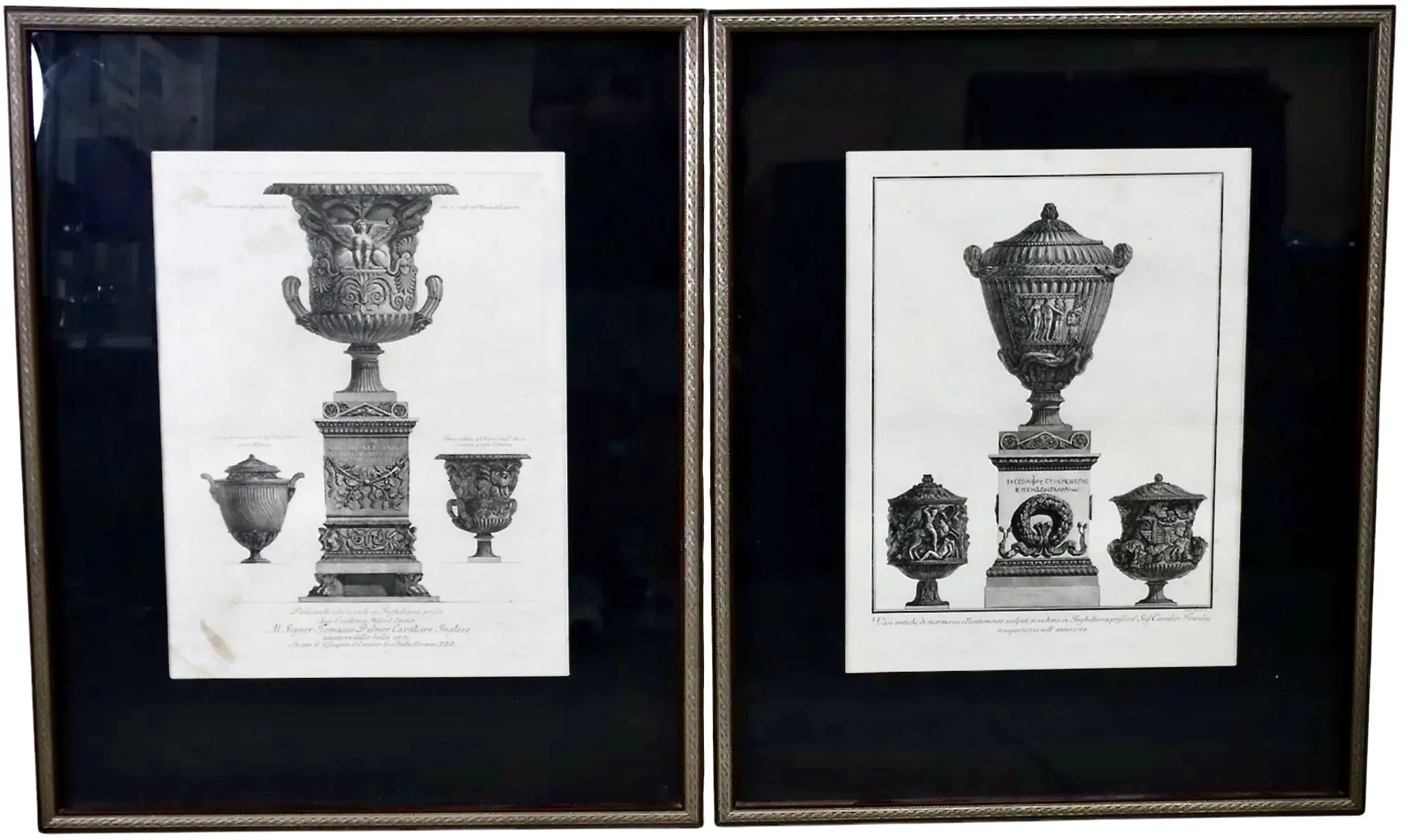 Image 1 of 9
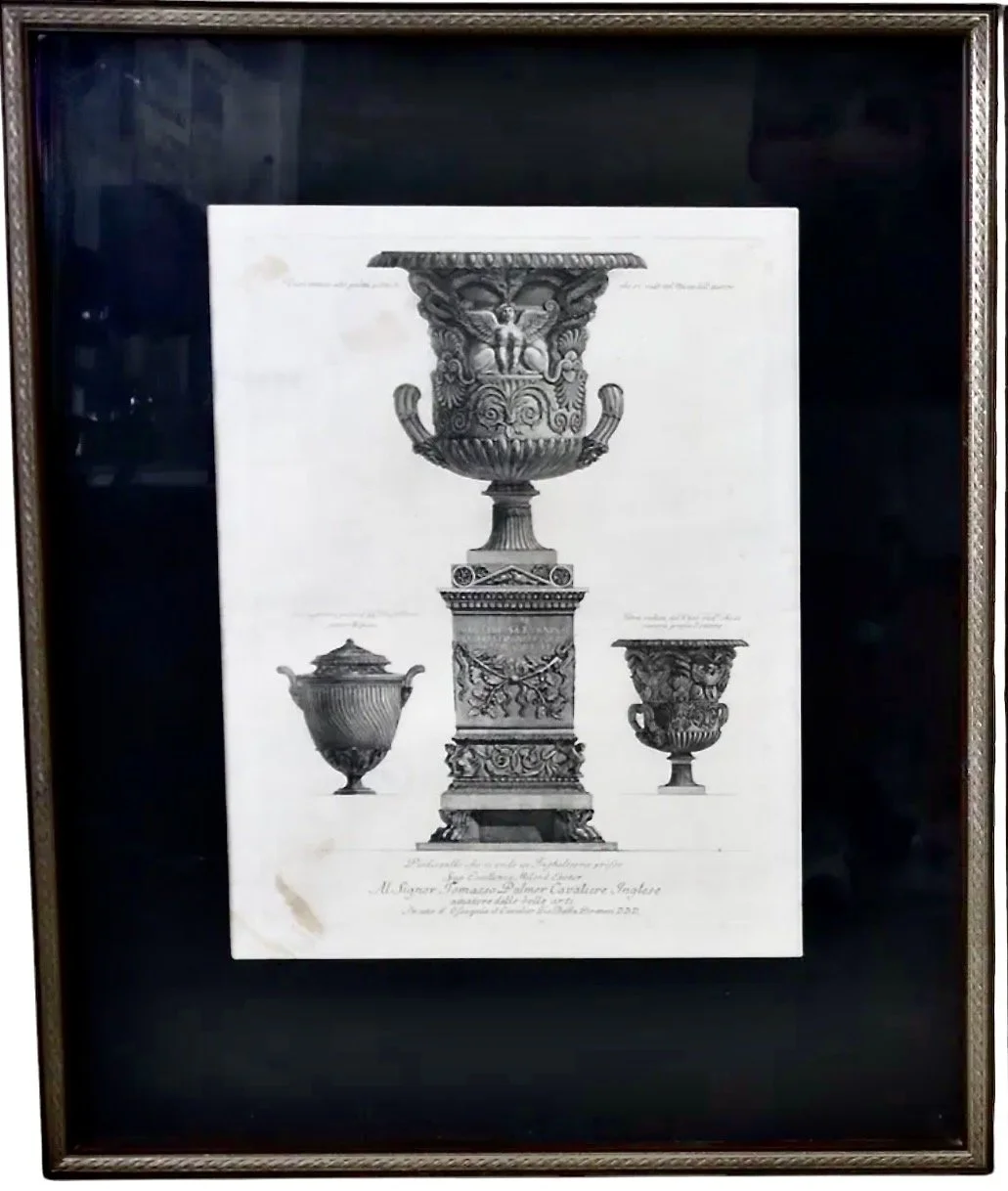 Image 2 of 9
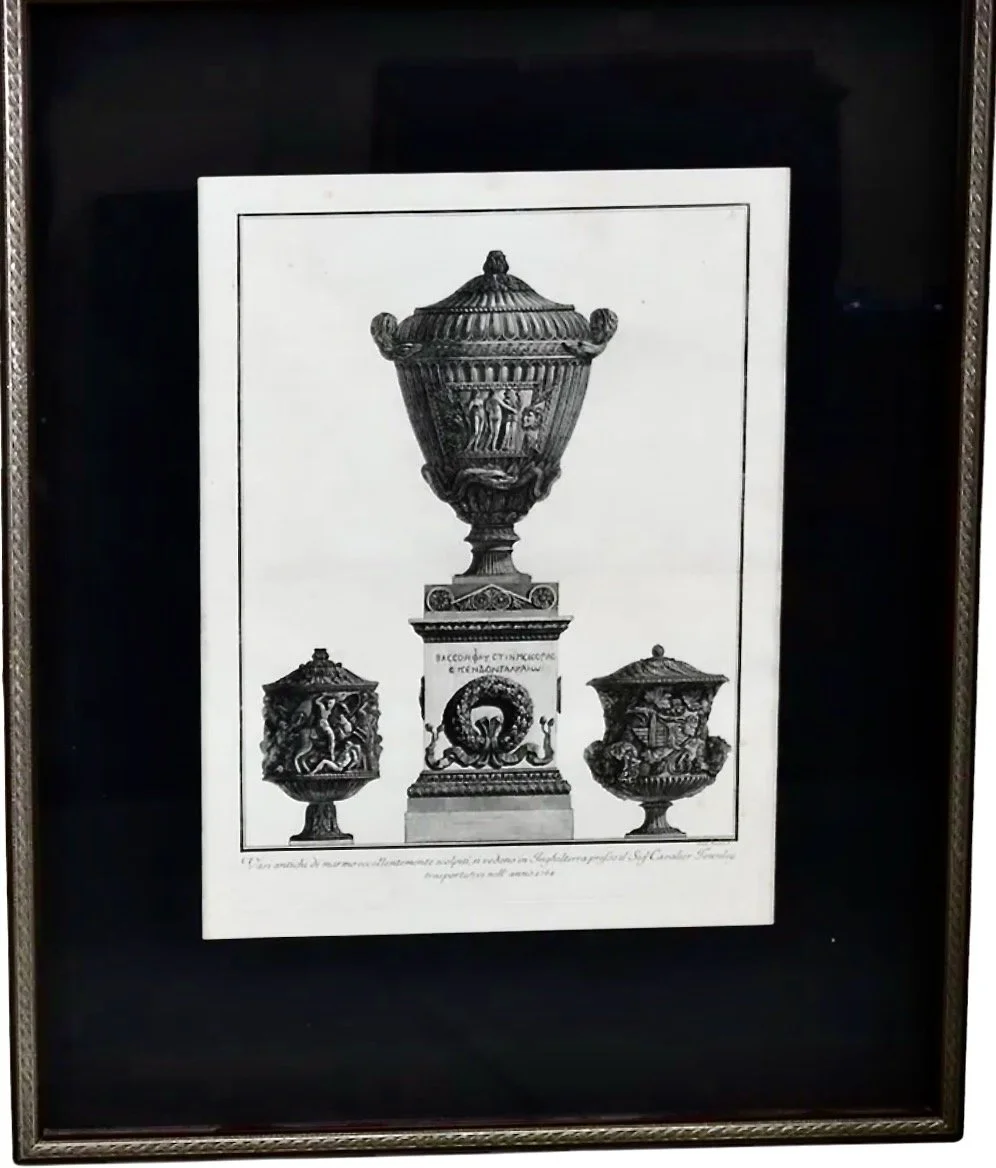 Image 3 of 9
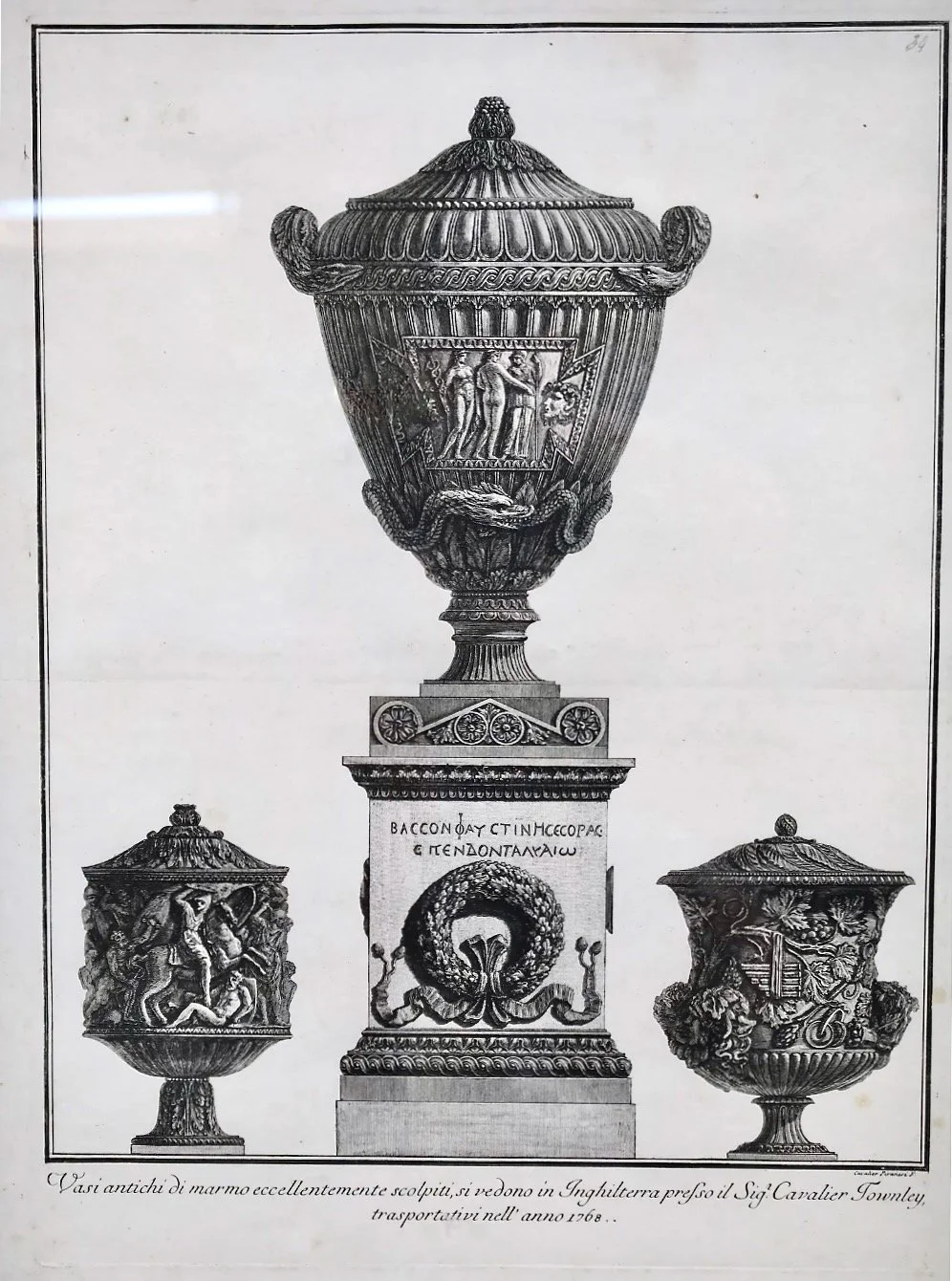 Image 4 of 9
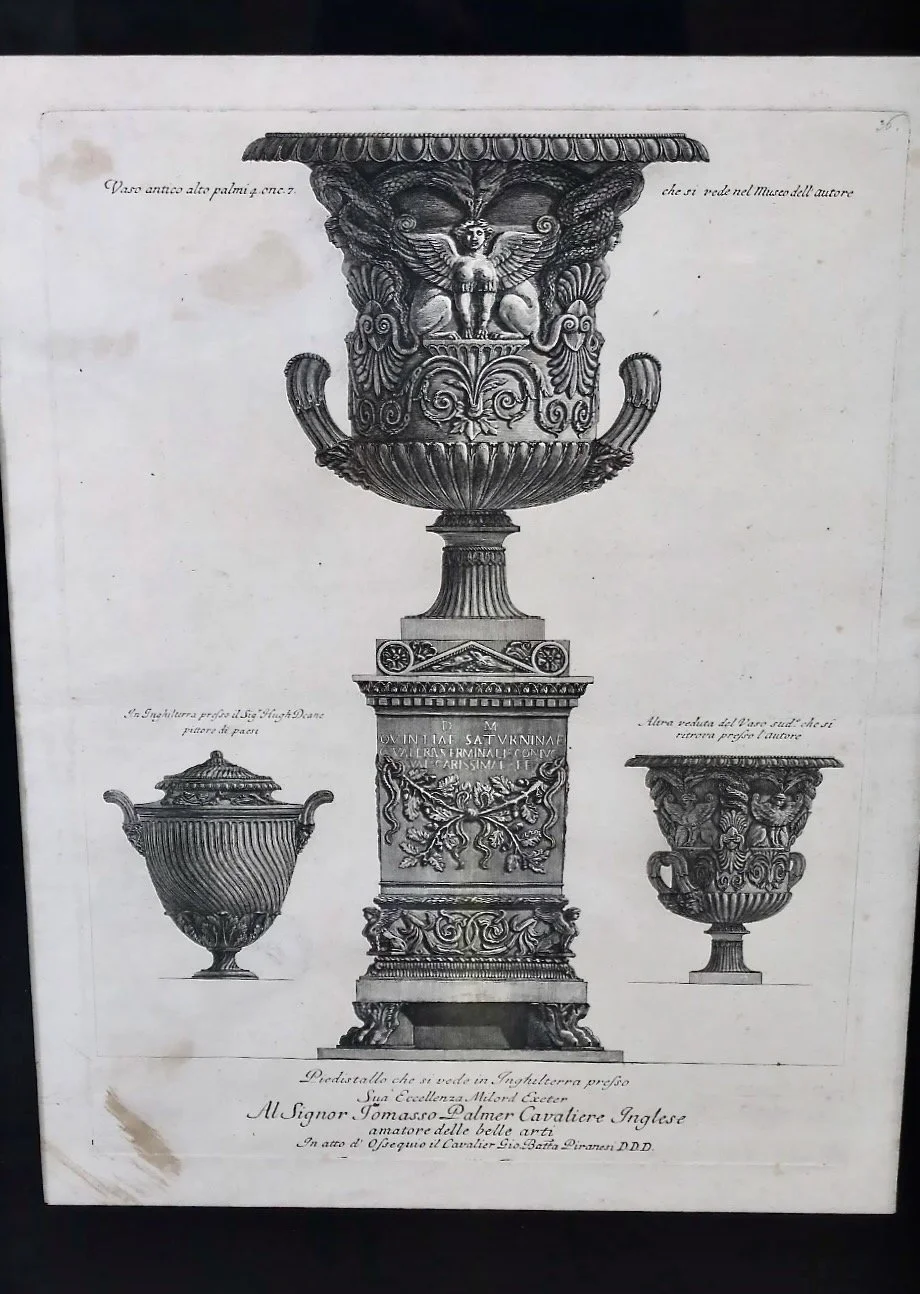 Image 5 of 9
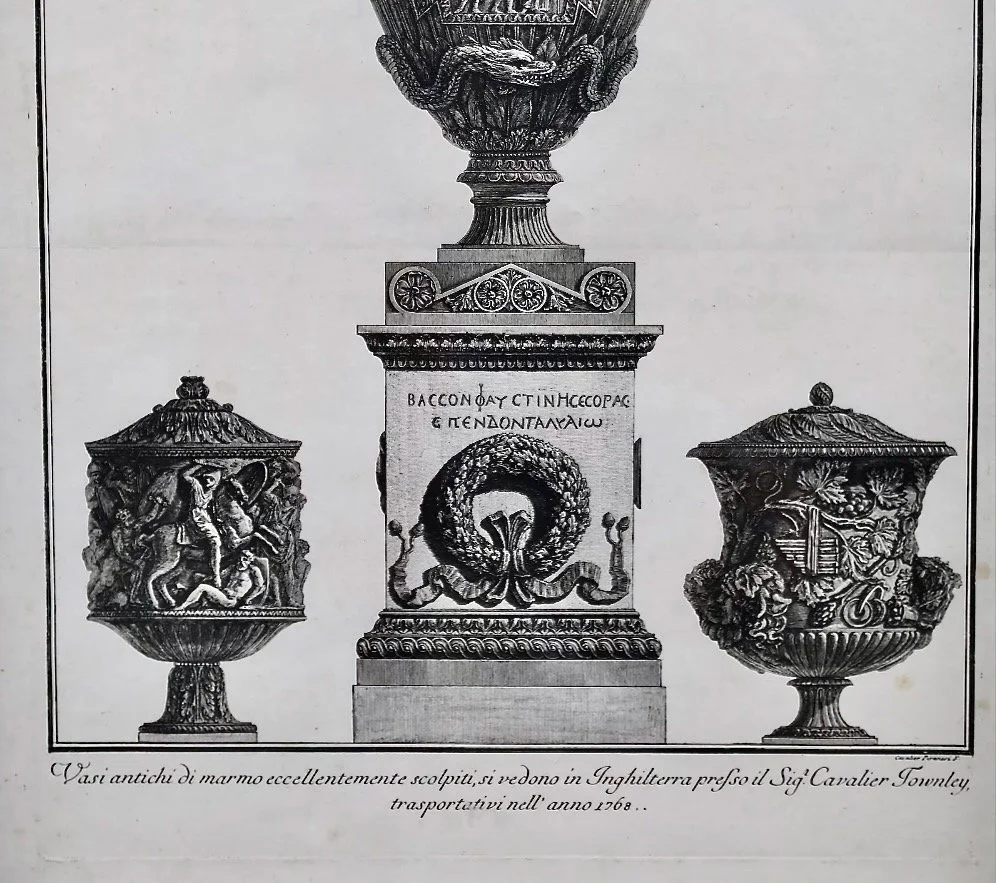 Image 6 of 9
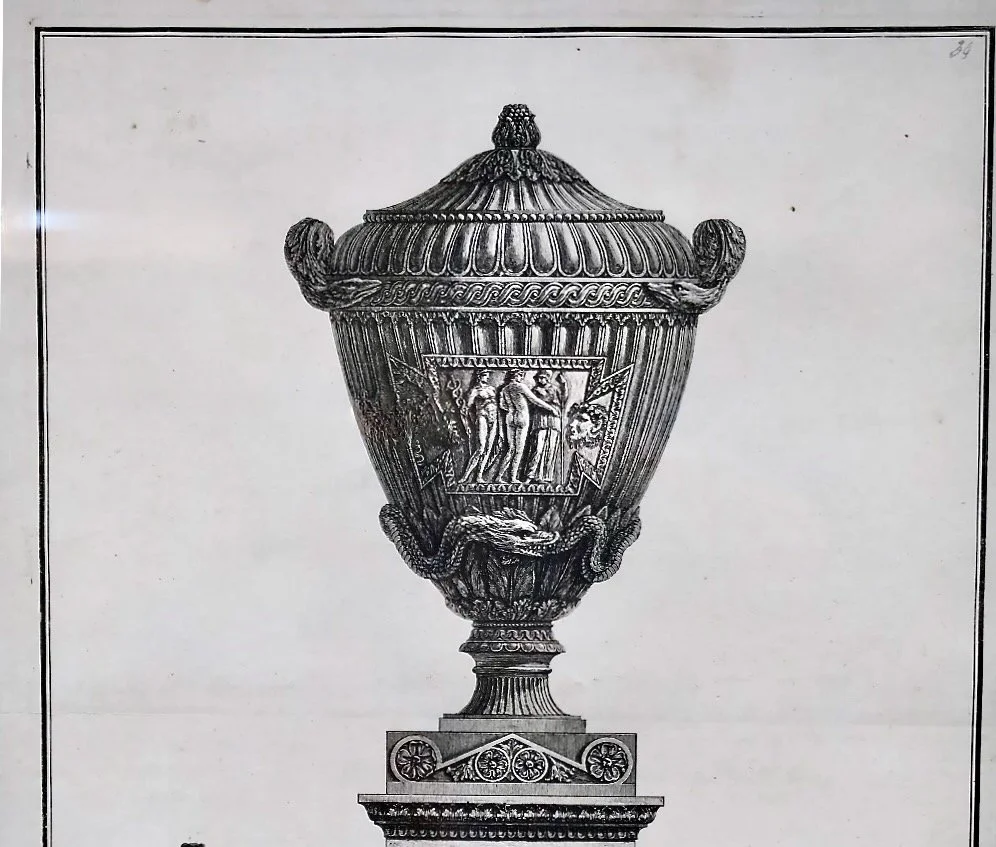 Image 7 of 9
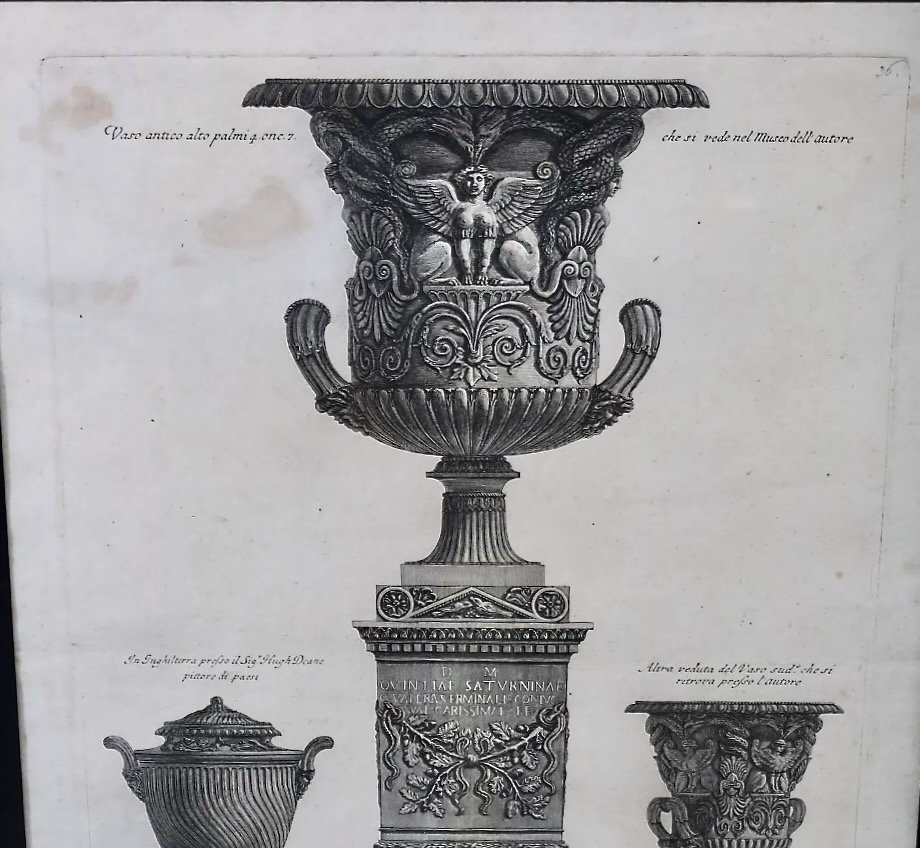 Image 8 of 9
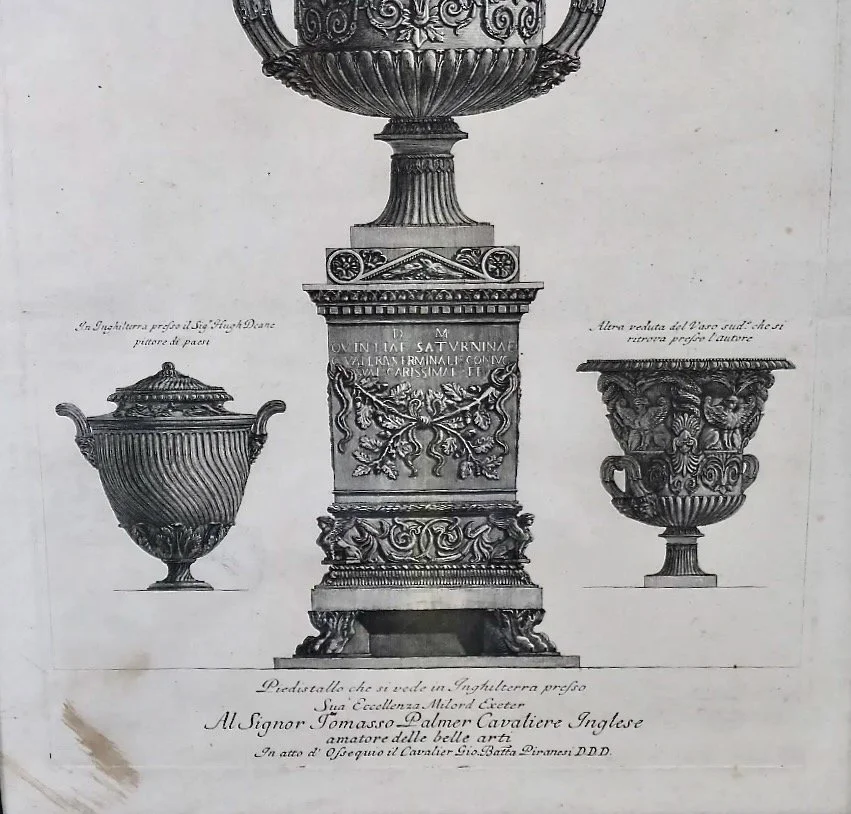 Image 9 of 9