
PIERRE ADRIEN DALPAYRAT
THE PEAK OF FRENCH ART NOUVEAU CERAMICS
I love to gamble—-I’ve never been to Vegas or even smelled a slot machine or dreamed of winning at Poker or Black Jack (although I did stop for lunch in Montecarlo) But the pull of an auction is irresistible and my personal addiction and passion. I’ve have, at times, found amazing treasures and also made big mistakes (the cost of my tuition to learn the decorative arts/antiques trade). A couple of months ago, at one of my favorite auctions, I felt drawn to a pair of unusual sang-de-boeuf (oxblood) lamps—I knew they weren’t Chinese?, maybe Arts & Crafts English?, the bases kinda looked Asian? Anyway, I said “Mary take a risk”. They came home (MJH DESIGN ARTS SHOP) and sat on my desk just looking at me for over a month. I asked Ken to rewire them and asked him to take off the bases and take a photo of the bottom of lamps so that I could see if there was a mark…… Ken rewired the lamps and did not take off the bases. So the lamps continued to sit on my desk and stare at me. I diligently searched the internet and finally found another similar pair of lamps and then found similar glazing that belonged to Dalpayrat ceramics. Which meant that my lamps might be by Pierre Dalpayrat and date to aruond the turn of the century……the lamps still sat there on my desk looking at me and becoming more beautiful by the minute—by now we had become best friends and very intimate…….I submitted to my quest and had Roberto (my life saver) take one lamp apart. And Yep!! The lamps were signed and numbered by the Dalpayrat factory. (Jumping Up-and-Down) I’ve include a brief bio of Pierre Adrien Dalpayrat below.
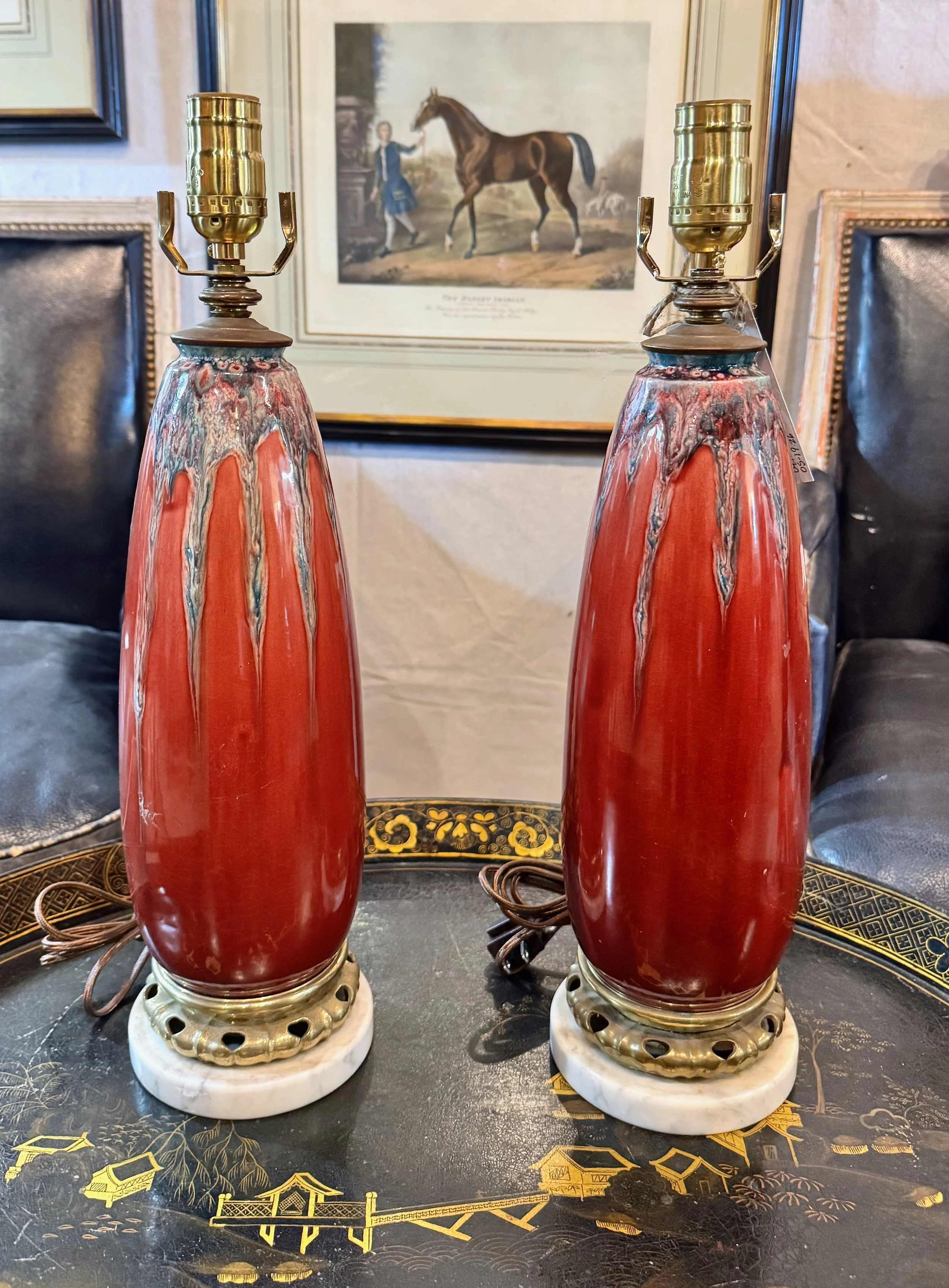
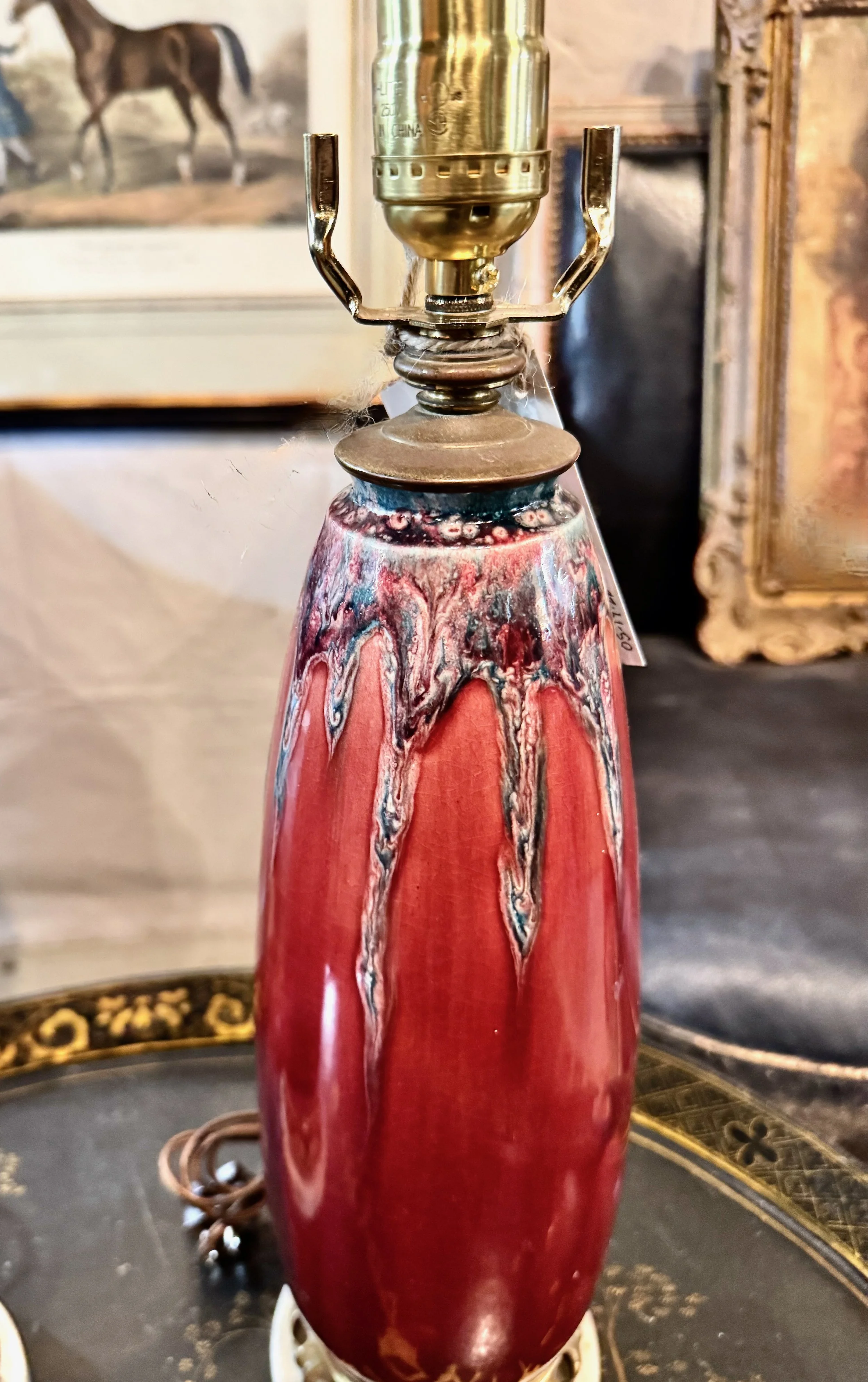
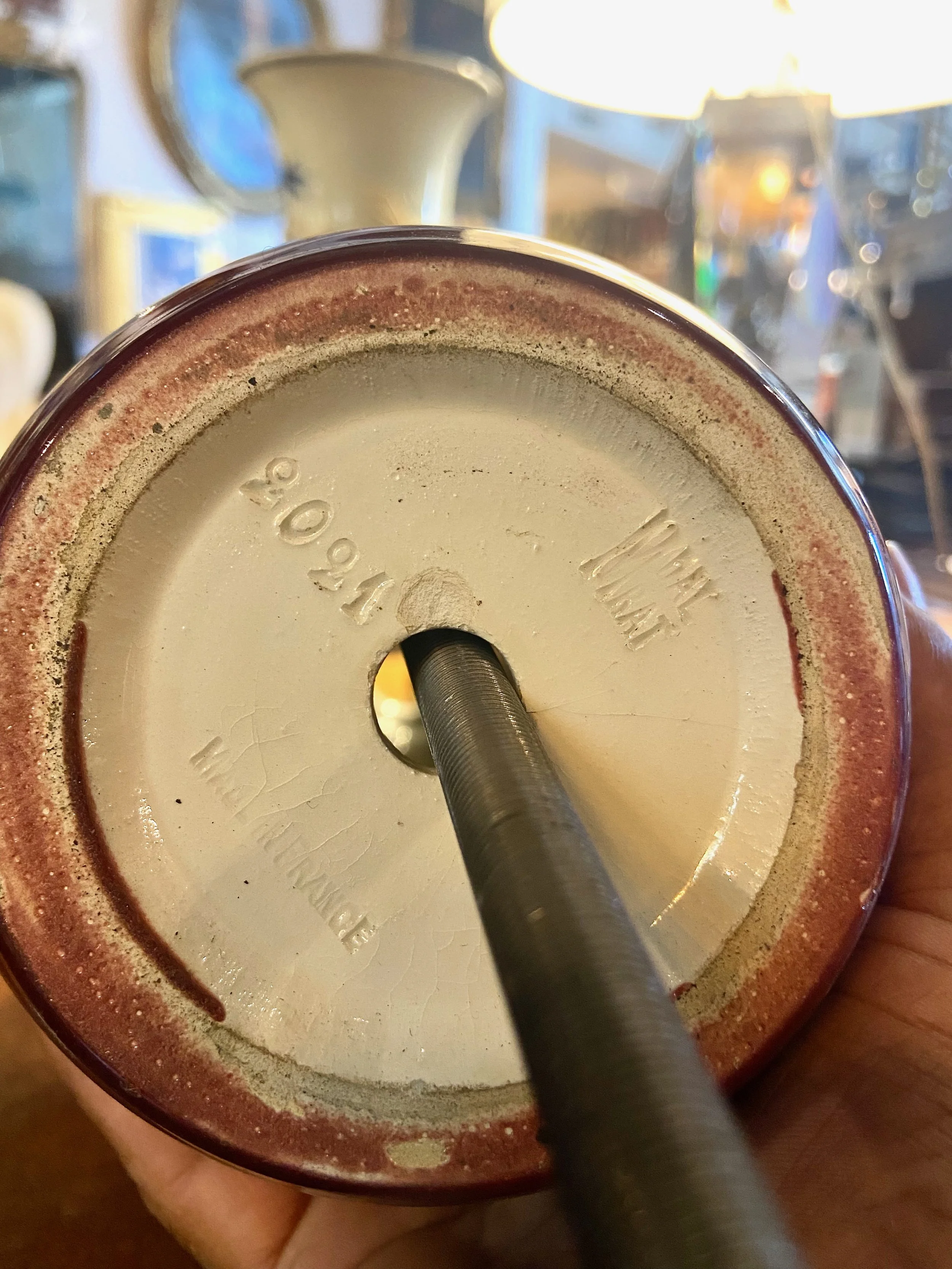
To see my listing with photos of my (sigh) Dalpayrat Lamps go to mjhdesignarts.com
At the twilight of the 19th century, European ceramics underwent a dramatic, elemental rebirth. Turning away from the rigid decoration of historical porcelain, trailblazing artists allowed raw clay and explosive minerals to speak for themselves. Standing at the absolute pinnacle of this movement was the French master ceramist Pierre-Adrien Dalpayrat (1844–1910). He was a man who famously transformed the unpredictable chemistry of the kiln into a canvas of living, breathing art.
Born in the porcelain-manufacturing hub of Limoges, France, Dalpayrat spent nearly thirty years working a relatively conventional path as an itinerant faïence painter. However, the late 1880s brought a seismic shift. Inspired by East Asian stoneware and the emerging tendrils of the Art Nouveau movement, Dalpayrat abandoned commercial manufacturing. In 1889, he established his independent workshop in Bourg-la-Reine, just south of Paris, and completely dedicated his life to the fiery magic of high-temperature stoneware (grès).
What makes Dalpayrat an immortal figure in design history is his mastery of flambé (transmutation) glazes. Like many of his contemporaries, he was heavily preoccupied with trying to recreate the legendary sang-de-boeuf (oxblood) glazes of the historical Chinese traditions. By firing copper oxides in oxygen-depleted "reducing" kiln atmospheres at temperatures up to 1500°C, Dalpayrat achieved something entirely unique. He developed a rich, pulsating crimson glaze so distinct that it was officially coined "Dalpayrat Red" (Rouge Dalpayrat). Rather than a static color, his signature glaze functioned like a liquid landscape—veined and mottled with dramatic pools of mossy green, amber, deep purple, and electric turquoise. Modern collectors, such as renowned architect Peter Marino, frequently liken his surfaces to abstract paintings made decades before the abstract movement was even born.
True to the spirit of Art Nouveau, Dalpayrat rejected the traditional potter’s wheel. Instead, he favored asymmetrical, organic forms that mirrored the untamed natural world:
Gourd and fruit silhouettes
Sculptural vessels reminiscent of corals and shells
Striking collaborations with Symbolist sculptors like Alphonse Voisin-Delacroix and Jean Coulon, resulting in dreamlike vases featuring hidden human faces, panthers, and whimsical flora
By letting the glaze crawl, drip, and bleed over these fluid shapes, the vessel itself ceased to be just a container—it became the primary subject of the artwork.
A Lasting Legacy
Though Dalpayrat’s studio faced mounting financial hardships and eventually closed its doors in 1906, his peak output earned him a Gold Medal at the historic 1900 Paris Exposition Universelle and the prestigious Legion of Honor.
Today, his works are fiercely sought after by international collectors and proudly anchored in major global institutions like the Musée d'Orsay in Paris and the Victoria and Albert Museum in London. Dalpayrat didn't simply paint pottery; he unlocked the poetry